
What Actually Changes Between Retail, Office, and Industrial Landscaping in DFW
Ask five landscaping companies what commercial landscaping means. Most will describe the same thing: mow, edge, trim, repeat, wherever the building happens to sit. That’s a mistake. A retail center, an office park, and an industrial site are different kinds of properties. They just share the same general label: commercial property. Each one needs the grounds to work differently for it. Here’s what actually changes from property to property, and why treating them all the same ends up shortchanging someone.
Retail Properties: The Landscape Is Advertising Before the Sign Is
A shopping center in Dallas or Fort Worth doesn’t get a second chance at a first impression. That first impression happens dozens of times a day, to people who have never been there before. The entrance, the parking islands, the sightline from the road: all of that works as advertising before anyone reads a single sign.
Research backs this up. Studies on well kept retail districts show that shoppers spend more time, and more money, in those areas than in neglected ones. Take an anchor client like Simon Malls, or any retail center competing for foot traffic along a busy DFW corridor. That entrance is doing real commercial work every single day. It’s not just there to look nice.
Retail is also the least forgiving property type when a visit gets missed. A stressed lawn at an office park might go unnoticed until Monday. The same problem at a retail center gets seen by hundreds of people over a single weekend, right when they’re deciding whether to stop.
This is also why retail needs seasonal color and mulch refreshes on a tighter cycle than an office park usually does. The traffic never really slows down, so the attention it needs can’t slow down either.
Office Properties: The Audience Is Smaller, and It’s There Every Day
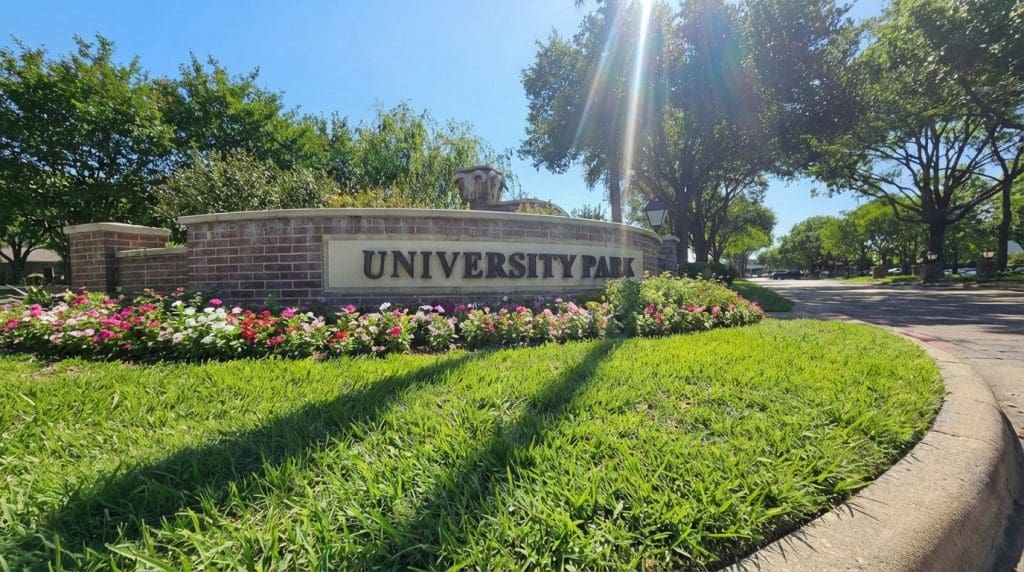
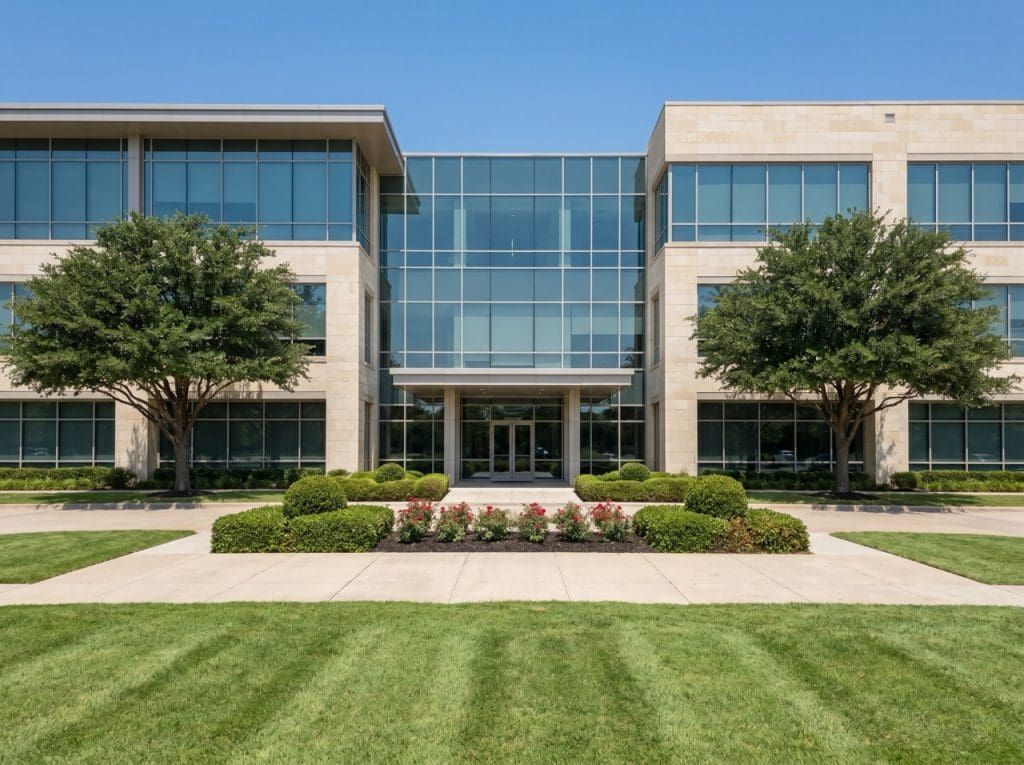
An office park in Legacy West or a corporate campus in Las Colinas has a completely different relationship with its landscaping. It isn’t drawing in strangers off the street. It’s serving the same group of people, five days a week. And more and more, those people are choosing whether coming into the office is even worth it.
That changes what the grounds are actually for. Picture a well kept walk from the parking lot to the lobby. A shaded courtyard where someone can take a call outside. Greenery that’s visible from a conference room window. None of that is decoration. It’s part of what makes an office feel worth showing up to. And it’s part of how a company signals stability to the people who work there every day.
Office properties get judged by a different kind of visitor than retail does. Fewer strangers walk through. But the ones who do, an investor, an auditor, a job candidate, are forming an opinion about whether this company is worth trusting. The volume is lower than a shopping center’s. The stakes, for that smaller group, are just as high.
Office landscaping also tends to include outdoor space that retail rarely bothers with: a courtyard, a walking path, a bench under real shade. Those additions cost more upfront. They earn it back slowly, through people who actually want to be in the building.
Industrial and Distribution Properties: Function and Safety Come First
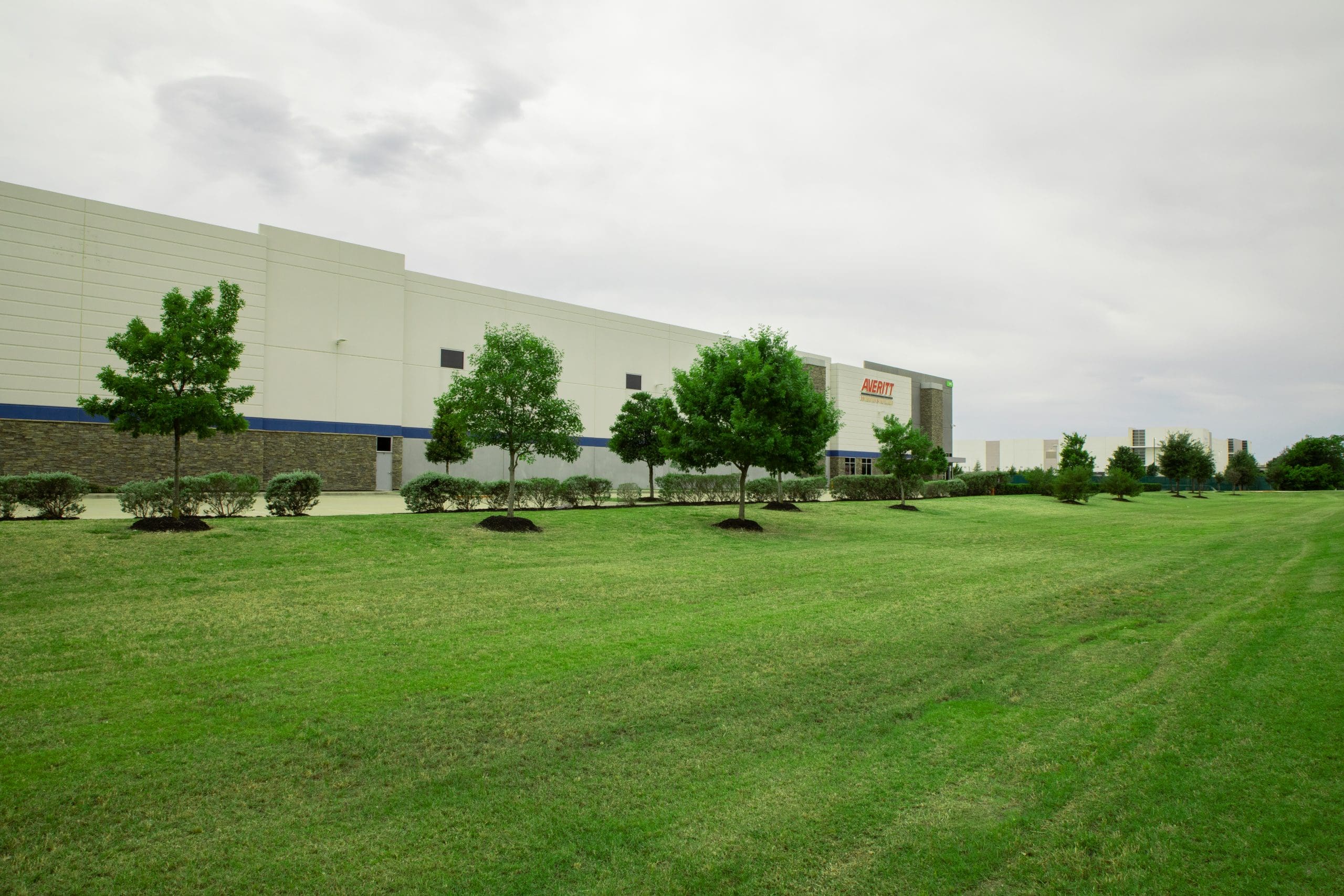
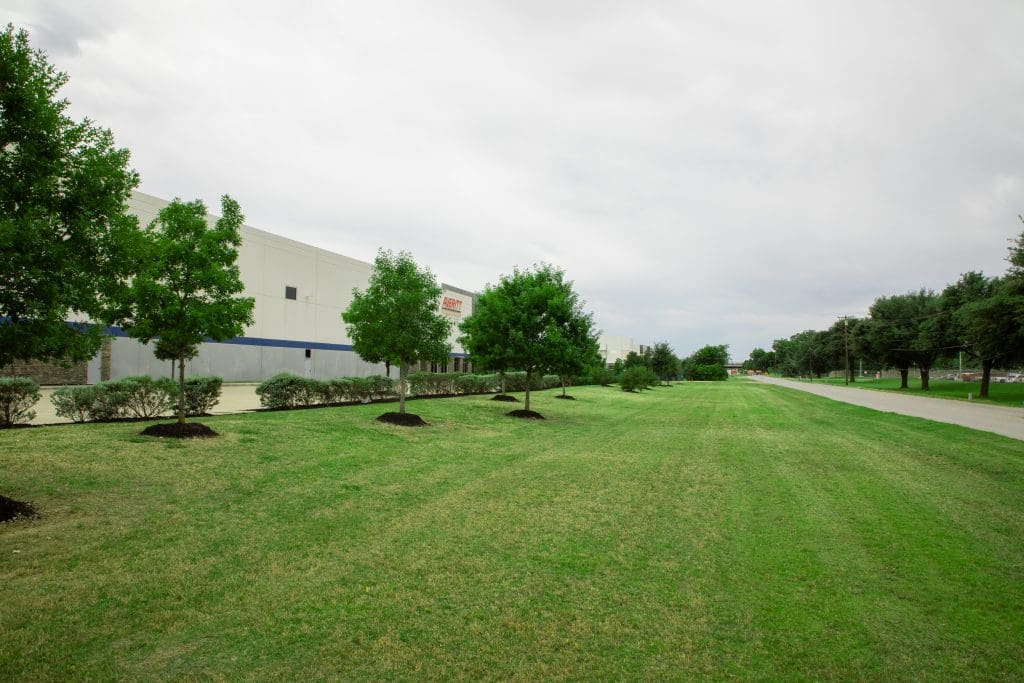
Industrial sites flip the whole equation again. A distribution center near the Alliance corridor or an industrial park in Grand Prairie isn’t trying to attract foot traffic at all. It’s managing trucks, forklifts, and constant vehicle movement. The landscaping has to work around that reality, not compete with it.
Large distribution buildings often need fire lane access clear on all four sides. That means wide, clear space for fire trucks, sometimes 26 feet or more. Truck courts need enough room for a full tractor-trailer to turn, with no shrub or root ball in the way. Plant choices matter here in a very literal sense. Overgrown branches near a loading dock aren’t just untidy. They’re a sightline problem for a driver backing a 53-foot trailer into a dock.
Even the choice between mulch and river rock becomes a safety decision on a site like this. Dry mulch next to a loading dock, on a Texas summer day, is a real fire risk. That’s simply not true at a shopping center entrance.
This is the property type most often treated like an afterthought. In reality, it needs the most technical judgment of the three. The right plants here are drought tolerant and low maintenance. They survive next to acres of heat radiating pavement. And they stay clear of dock doors, fire lanes, and the space trucks need to turn. That’s a different job than choosing color for a mall entrance. It takes a crew that knows the difference.
Why Treating Every Commercial Property the Same Underserves Someone
Most landscaping vendors quote all three property types off the same generic plan. That’s where things go wrong. Apply a retail playbook to an office park, and someone ends up paying for seasonal color nobody’s there to see on a Sunday. Apply an office playbook to a retail center, and the entrance suffers right when foot traffic peaks. Ignore the industrial layer entirely, and the result is a real liability problem: an overgrown sightline at a loading dock, or landscaping planted inside a required fire lane.
Each of those mistakes is avoidable. None of them requires a bigger budget. They just need a plan built for that specific property, instead of copied from the last one on the route.
None of this takes special expertise. It just takes asking what kind of property this is before writing the plan. Too many vendors run the same maintenance schedule across a portfolio that includes a mall, an office campus, and a warehouse.
How This Works at Green Empire
This is exactly why we built a Commercial Specialist team, instead of treating “commercial” as one bucket. It sits alongside our Lawn & Turf Specialist team, who handle the technical side of turf health. It also sits alongside our Multifamily, HOA & Residential Specialist team, who work through the leasing and community side of the business. Each specialist field exists for the same reason. A property manager’s world looks different depending on what they manage, and a generic answer doesn’t hold up against a real one.
In practice, that means our Commercial Specialist walks a retail center asking about entrance sightlines and seasonal color cycles. At an office park, the questions are about employee walkways and shaded gathering space. At an industrial site, it’s fire lane clearance and truck turning room. All of that happens before a single mowing schedule gets written.
If your portfolio includes retail, office, or industrial properties in DFW, and you’re not sure your current landscaping plan accounts for the difference, talk with a specialist about what your property actually needs.