
Commercial Landscaping Dallas: What Summer Heat Does to Your Turf
You know the feeling. You pull up to a commercial property and within a few seconds, something just clicks. TheBy July, you already know which vendors show up. Commercial landscaping in Dallas through the summer heat isn’t a mowing problem — it’s a reliability problem, and the season tests both. When triple-digit days hit North Texas, turf that looked fine in May starts thinning, browning, and pulling away from the curb where every prospective tenant sees it first. The properties that hold their appearance through August aren’t lucky. They were prepared in June. This guide covers what summer heat actually does to commercial turf, the four practices that protect it, and why the difference comes down to your vendor.
A DFW summer is a stress test, not a season
Dallas–Fort Worth doesn’t ease into summer. August averages a high of 97°F and hit a record 107°F in 2023, with humidity that pushes the heat index past 100°F for weeks at a time. This is humid subtropical climate, not dry desert — which means heat and moisture stress your turf at the same time, raising the risk of disease on top of drought damage.
For a single-family yard, a rough summer is cosmetic. For a 200-unit multifamily property in Plano or a retail center along the Irving corridor, it’s operational. Browned-out common areas, bare patches at the entrance, and stressed beds all land on the same place: the first impression a prospective tenant forms before they ever see a floor plan. In a market where DFW multifamily vacancy is sitting around 12%, that first impression is doing real work. The summer isn’t a season you wait out. It’s a stretch where the property either holds its standard or quietly loses ground.
What heat stress looks like before the turf dies
The mistake most property managers make is reacting to brown grass. By the time turf browns, you’re already in recovery mode — and recovery in 100°F heat is slow and expensive. The window that matters is the one before that, when the damage is still invisible to anyone who isn’t looking for it.
Warm-season grasses signal stress early, and the signs are specific:
- A blue-gray or dull cast across the blades — the first sign of moisture stress, before any browning
- Footprints that stay visible after someone walks across the lawn, instead of springing back
- Curling or folding blades, especially in exposed western-facing areas
- Thinning at high-traffic edges — entrances, mailbox clusters, walkways
Catch these and the turf recovers with an irrigation adjustment. Miss them for a week in July and you’re looking at dormancy, then dieback. Replacing turf in North Texas runs $8–15 per square foot installed — so on a commercial property, the cost of missing the early signs isn’t measured in a service visit. It’s measured in a capital line item.
The four things that protect commercial turf through peak heat
Heat management isn’t complicated. It’s a handful of practices done consistently, on schedule, by a crew that knows the property. These are the ones that matter most across DFW.
1. Raise the mowing height — and respect the one-third rule. Taller grass shades its own soil, keeps roots cooler, and slows evaporation. For warm-season turf common across North Texas, that means cutting toward the higher end of the range and never removing more than one-third of the blade in a single pass. Texas A&M AgriLife Extension publishes species-specific management guidance for Bermuda and St. Augustine that confirms the same principle: scalping a lawn in summer is one of the fastest ways to invite heat damage.
2. Water deep and early, not often and shallow. Frequent light watering trains shallow roots that fry in a heat wave. Deep, infrequent watering in the early morning — before the day’s heat pulls it back into the air — drives roots down where the soil stays cooler. The timing matters as much as the volume.
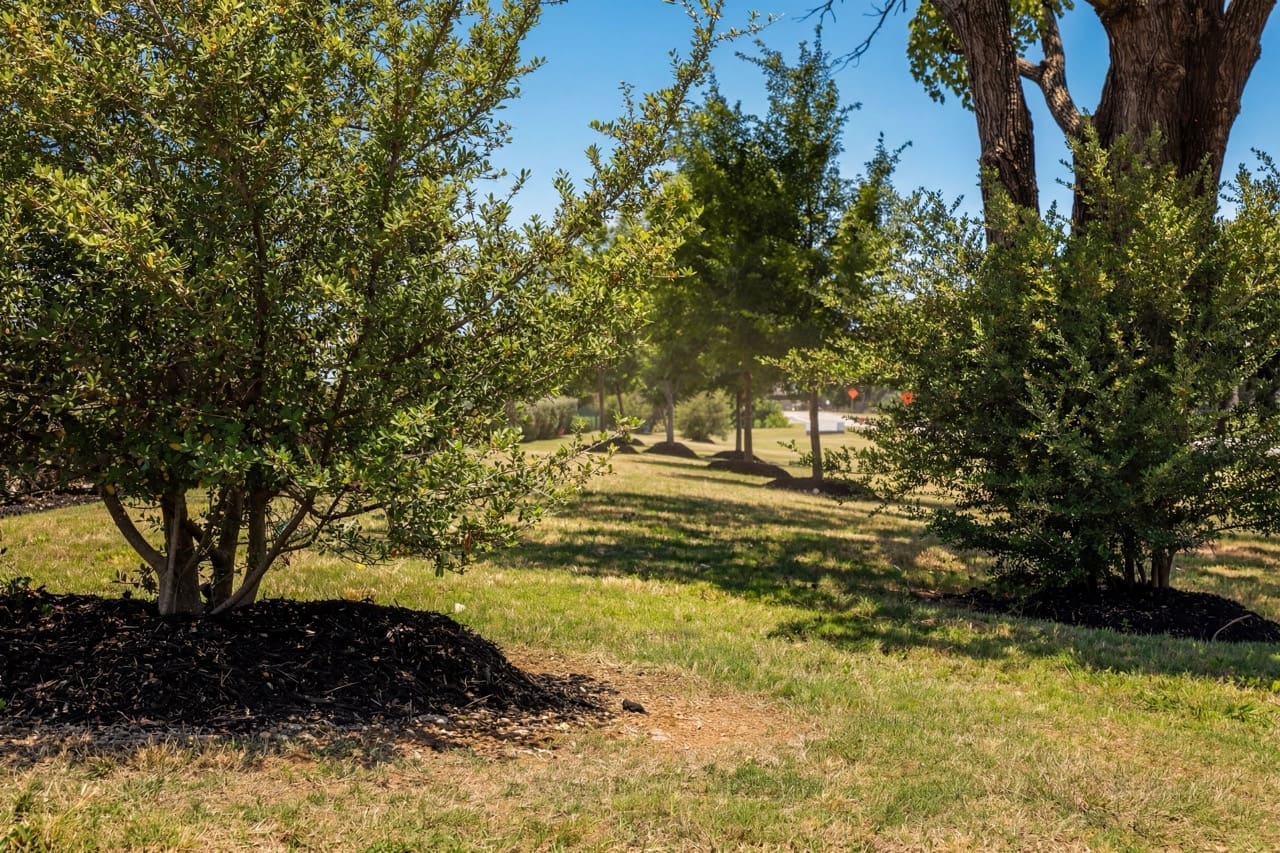
3. Maintain mulch coverage in beds. Mulch regulates soil temperature and holds moisture. As it breaks down over spring, its protective value drops, which is why refreshing it before peak heat is worth the line item rather than a nice-to-have.
4. Run an active drought watch. Sharp blades, broken sprinkler heads caught early, mowing scheduled for cooler hours — the small things compound. This is the part that separates a maintenance contract from a crew that’s actually watching the property.
Heat damage shows up on your NOI, not just your curb
It’s easy to file landscaping under aesthetics. On a commercial or multifamily property in this market, that’s a mistake. With vacancy near 12% across DFW and asking rents soft, curb appeal is one of the few levers a property manager controls that directly affects lease-up speed. A prospect deciding between two comparable properties in Frisco or Garland is reacting to the entrance, the grounds, the first thirty seconds — often before they’ve consciously decided anything.
Stressed, patchy turf doesn’t just look bad. It signals deferred maintenance, it slows tours, and it costs you on the comps. Protecting the grounds through summer is protecting NOI. The properties that understand this treat consistent commercial lawn maintenance as an occupancy strategy, not a cosmetic one.
The takeaway for DFW property managers
Two things carry a commercial property through a Dallas summer. First, the right practices done consistently — higher mowing heights, deep morning irrigation, mulch, and active monitoring before the turf ever browns. Second, and more important, a vendor who executes those practices through July and August without you having to chase them. The techniques are knowable. The reliability is the variable. Commercial landscaping in Dallas during summer heat is manageable — when the crew on your property is one that actually shows up.
If your current grounds maintenance is one missed July visit away from a problem, it’s worth a conversation before peak heat arrives.
Schedule a Complete Property Assessment with Green Empire. We’ll identify exactly what’s holding your property back from that premium tier, and what it takes to get there.