
Why Route Planning Is the Most Practical Sustainability Decision in Commercial Landscaping
Most sustainability claims in commercial landscaping are hard to verify. A vendor says they’re eco-friendly. There’s rarely a way to check. Route planning is different. It’s a specific choice with an effect you can measure. Fewer miles driven. Less fuel burned. A lower environmental footprint for every property served.
It also happens to be one of the best ways to control cost and protect a schedule. That’s a rare combination: real environmental benefit and real business benefit, from the same decision. It’s worth explaining in detail, not folding into a vague sustainability statement.
What “Planned Routes” Actually Means
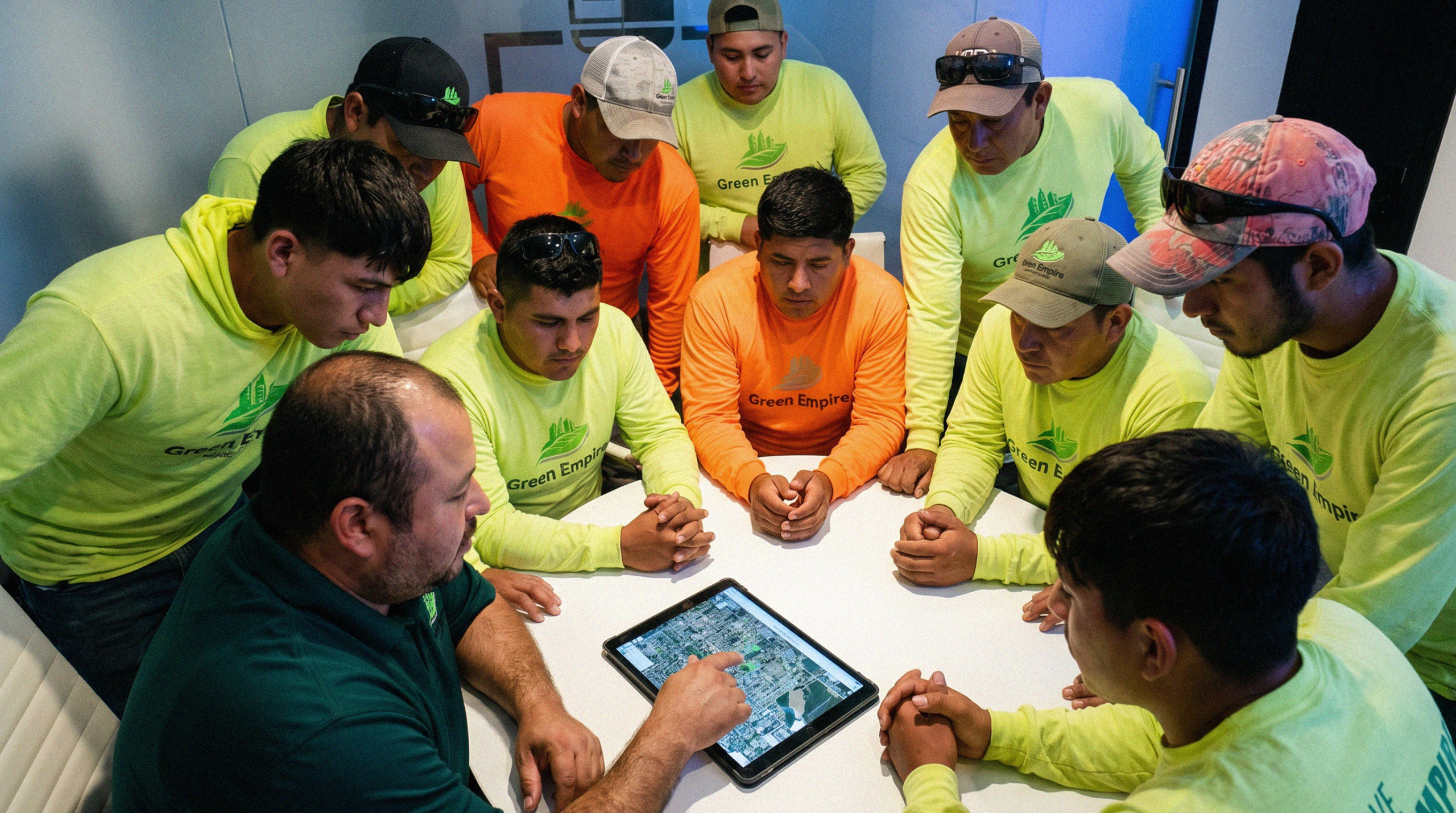
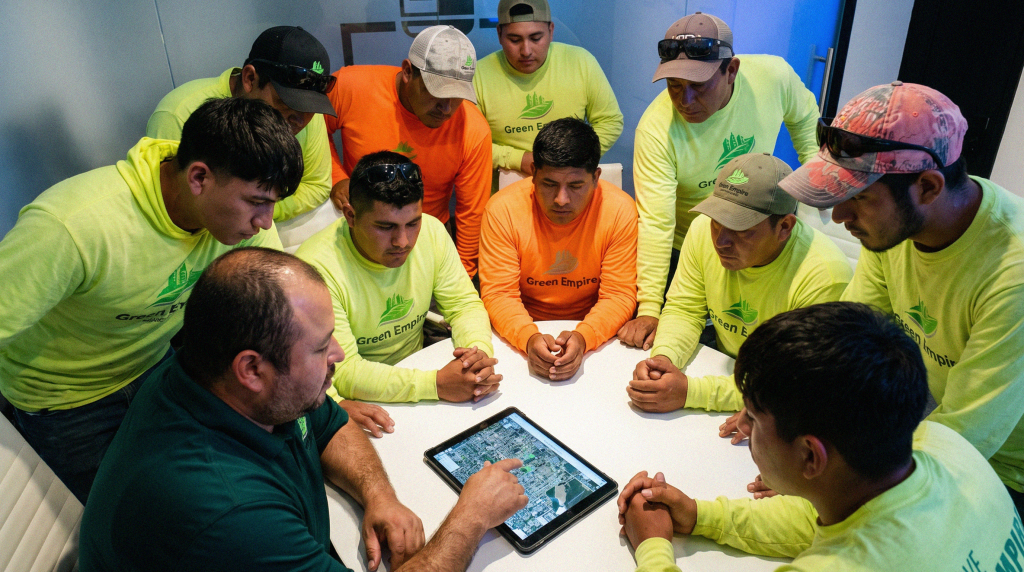
A planned route means a crew’s day is built around geography, before the truck ever leaves the yard. Properties get grouped into defined zones. A crew working North Dallas one day isn’t also expected to cross town to Arlington and back. Stops within a zone get sequenced too, to avoid backtracking. The truck moves from one property to the next along a logical path. It doesn’t zigzag based on whatever order a job happened to land on a list.
The alternative is a schedule built reactively, day by day. Stops get assigned in whatever order they come in. A crew can end up driving across the Dallas-Fort Worth metro multiple times in a single day. One property in Las Colinas in the morning. One in Frisco by afternoon. There’s no real reason for that order, beyond convenience in building the schedule. Every one of those extra miles burns fuel a planned route wouldn’t need.
This is also easier to sustain with in-house crews than with subcontractors. A crew that’s part of the company can be assigned to the same zone, week after week. They learn the properties. They learn the most efficient path between them. A rotating subcontractor doesn’t get that chance. They’re reassigned from job to job, with no reason to learn a territory that well. Route discipline only pays off over months, not a single visit, and a subcontractor has no incentive to build it.
What This Actually Saves
Fuel is a real cost line in this industry. It commonly runs between 5 and 10 percent of a landscaping company’s revenue. In some fleets, it’s closer to 30 percent of the total operating budget. That’s once vehicles, maintenance, and driving time are all counted. It’s also one of the most controllable costs. That’s true if the routing behind it is actually planned, instead of assembled on the fly.
Across the lawn care and landscaping industry, companies that build real route density see real results. They commonly report fuel savings of 20 to 30 percent compared to unplanned routing. Route density just means tighter geographic zones and sequenced stops, instead of scattered dispatch. Separate studies on GPS-based fleet routing put the average fuel reduction closer to 13 percent for commercial fleets in general. That’s a more conservative number, but it still adds up to real money and real emissions over a full season.
None of this requires exotic technology. It just requires treating the route itself as part of the service. Not an afterthought figured out the morning of. It’s a decision made in advance, not a scramble.
Fewer miles also means less wear on the fleet itself. Vehicles that spend less time in transit need less frequent maintenance. They last longer before replacement too. That’s its own quiet form of cost control, layered on top of the fuel savings.
Why It’s Also a Reliability Story
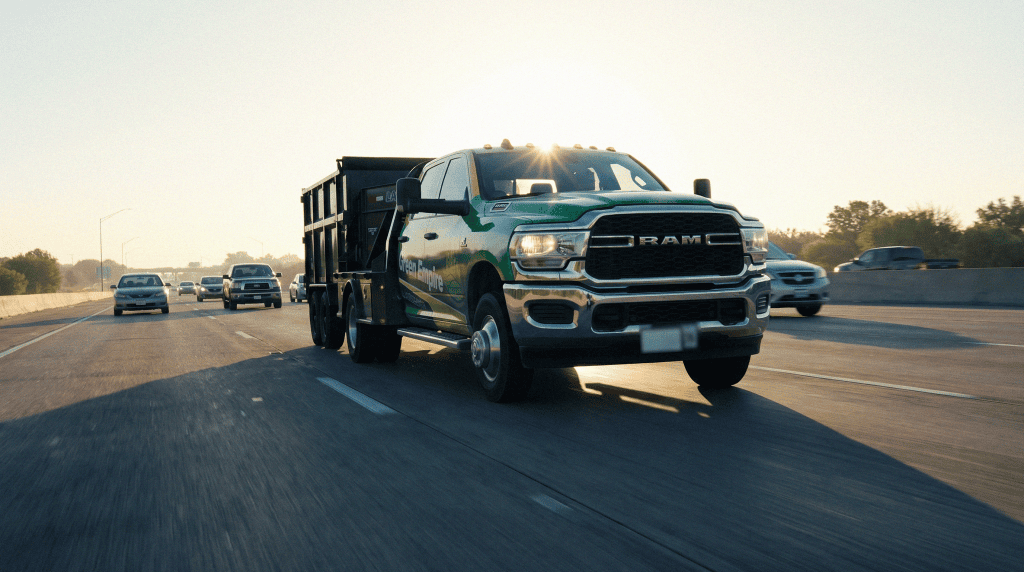
The interesting part: the same choice that reduces fuel use also protects the schedule. A crew that isn’t spending half the day driving across the metro has more working hours left. Those hours go to the properties on the list. Tighter zones mean shorter drive times between stops. That means a crew is more likely to arrive in the window a client was told to expect. Not an hour late, because the last three stops ran long or the drive between them took longer than planned.
It shows up in small ways that add up. A crew running a tight, familiar zone can often fit in an extra stop. Or handle a same-day request from an existing client. The day was never eaten up by unnecessary driving in the first place. A crew running a scattered, unplanned schedule has no such slack.
Sustainability and reliability aren’t two separate initiatives here. They come from the same decision: build the route with intention, instead of assembling it reactively. A vendor that has never bothered to plan routes carefully is unlikely to be strong at either one. Both problems have the same root cause.
From a client’s side, this rarely shows up as a specific line item. It shows up as a crew that’s consistently on time, instead of consistently a little late. Week after week, that’s the kind of detail that either builds trust, or quietly erodes it.
Why This Matters to an Institutional Owner
For a REIT or a larger institutional owner, this is more than an operational nicety now. Vendor-level sustainability reporting is becoming a real expectation, not a courtesy. More property owners are being asked to account for environmental impact. Not just their own operations, but everyone working across their portfolio. That can mean supplying actual fleet mileage or estimated emissions data during a portfolio-wide review. Not just a line in a proposal.
A vendor that can describe an actual route structure has something concrete to point to. Defined zones. Sequenced stops. In-house crews on consistent territory. A vendor whose answer is a general statement about caring for the environment does not. That difference matters more every year, as sustainability reporting moves from a nice addition to a standard expectation.
Route planning is one piece of a broader practice. It sits alongside things like where green waste actually goes after it leaves a property. None of it works as a single announcement. It works as a set of decisions that hold up when someone asks for specifics.
This is why route planning sits inside our sustainability practice at Green Empire. It’s not off to the side of it. Defined zones. In-house crews assigned to consistent territory. Routes sequenced before the day starts. That’s the same structure behind our reliability. It also happens to be the more responsible way to run a fleet across DFW.
If your current vendor can’t describe their routing beyond “we get to it,” that’s worth noticing. Talk with a specialist about what a planned route actually looks like.