
What a Commercial Landscaping Walkthrough Covers in DFW
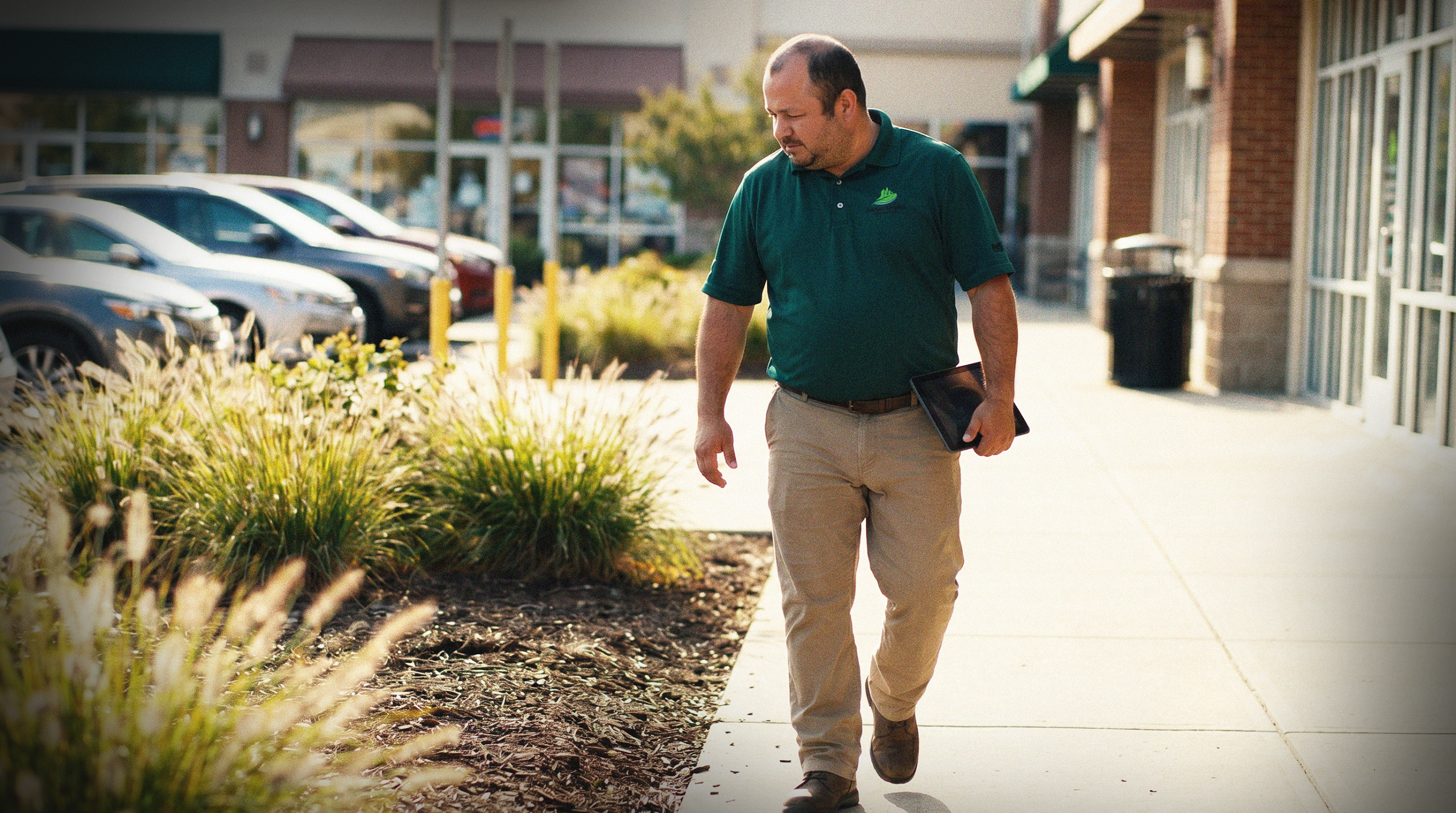
A commercial landscaping walkthrough in DFW should follow the same sequence at every visit. Most vendors say they walk the property. Few can name what they check, or in what order. Without a defined sequence, nothing gets caught early and nothing gets compared to last week. Small problems sit long enough to become expensive ones.
Here is what a commercial landscaping inspection covers on a DFW property, in the order it happens. A vendor with a real system can describe that order in specific terms. A vendor without one can only offer a general assurance that everything is handled.
Why the Order Isn’t Arbitrary
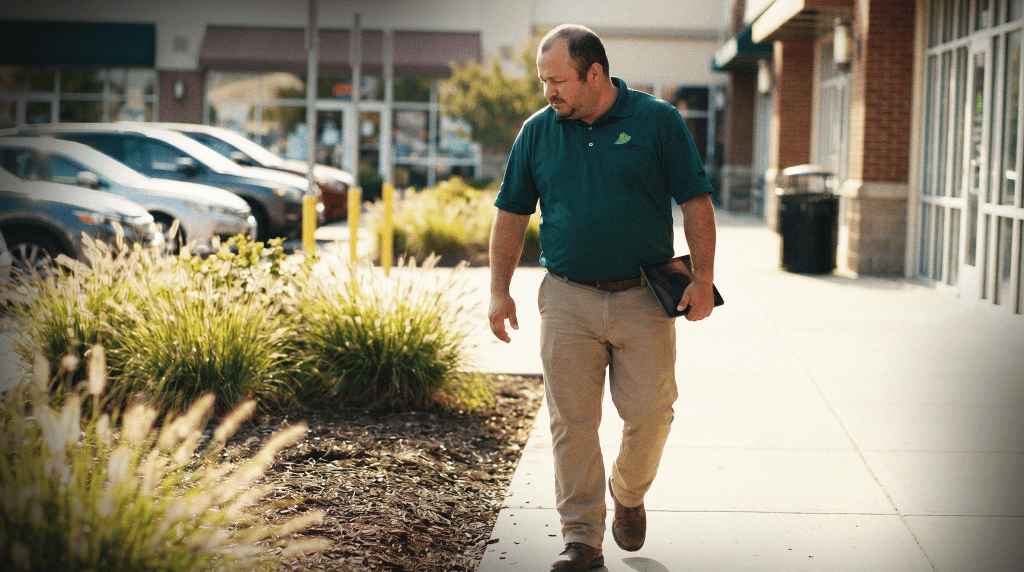
A commercial landscaping walkthrough in DFW should follow the same sequence at every visit. Most vendors say they walk the property. Few can name what they check, or in what order. Without a defined sequence, nothing gets caught early and nothing gets compared to last week. Small problems sit long enough to become expensive ones.
That consistency is the entire point. A crew that walks a property the same way every week knows what it looked like seven days ago. They can spot a stressed patch of turf while it’s still small. Or a clogged irrigation head. Or a drainage issue. A crew without a routine is comparing what they see today to nothing in particular.
It also means a new crew member can be trained on the sequence itself, not just on general landscaping skill. That’s part of how a consistent standard gets maintained, even as a team grows.
This is also why walkthroughs done by a rotating subcontractor tend to miss more. Someone new to a property every few weeks has no baseline to compare against. It doesn’t matter how careful they are.
Edges and Turf First
Edges get checked first. That’s where neglect shows up before anywhere else. An edge that’s gone a week too long without trimming is visible from the street. It’s usually the first thing a property manager notices when a schedule has slipped.
Turf comes next. The crew looks for stress before it turns into visible damage. In a North Texas summer, grass under heat stress shows subtle signs first. A slight color change. A texture that feels different underfoot. Patches that don’t spring back after being walked on. All of that happens before it actually browns. This shows up especially in properties around Frisco and Plano. New sod is common there, on recently developed sites. Heat stress can appear within days of a missed watering cycle.
Catching that early might mean adjusting the watering schedule for one section. Missing it for a few weeks in July or August is different. A full section of turf might need to be replaced. That commonly runs $8 to $15 per square foot, once soil prep and new sod are counted. A five minute check would have avoided that cost entirely.
Irrigation Heads and Mulch Lines
Irrigation heads get checked for two things. First, whether they’re actually running. Second, whether they’re pointed where the water needs to go. A head that’s shifted after mowing can drift out of alignment. It can water a sidewalk for months without anyone noticing, while the turf six feet away goes dry.
Mulch lines matter for a similar reason. A healthy mulch bed holds moisture and keeps weeds down. A thin or washed out one stops doing either job. The plants behind it start showing it within a couple of weeks. Checking the mulch line on a schedule catches that early. A client never has to ask why a bed looks patchy.
Drainage, After It Rains
Drainage gets checked separately, ideally soon after a rain event. That’s the only time you can actually see whether water is moving where it should. Standing water in a low spot. Erosion along a slope. Mulch washed into a walkway. All of that is easy to miss on a dry day, and obvious right after a storm.
In cities like Arlington and Fort Worth, summer storms can be sudden and heavy. A drainage problem that goes unnoticed for a season can turn into real erosion damage. Not just an inconvenience. Catching it during a routine walkthrough is far cheaper. Fixing it after it undermines a walkway or a planting bed costs a lot more.
The Entrance, Last, on Purpose
The entrance gets checked last, and that’s deliberate. It’s the one part of the property nearly everyone sees. A tenant walking in. A visitor. A delivery driver. It’s the section a crew wants to leave in the best possible condition before they go.
Ending the walkthrough at the entrance also works as a final quality check. Everything upstream should already be handled by then: the edges, the turf, the irrigation, the mulch, the drainage. If it was, the entrance should already look right by the time the crew gets there. If it doesn’t, that’s usually a sign something earlier in the route got missed.
What Gets Recorded, Not Just Noticed
None of this is worth much if it disappears the moment the crew gets back in the truck. Say a stressed patch of turf gets noted during a walkthrough, but never logged anywhere. That’s almost the same as never noticing it at all. There’s nothing to compare against the following week. The walkthrough only works as a system if what gets seen also gets recorded, even briefly. That way, the next visit starts with a clear answer: was this here last time or not.
Why a Structured Walkthrough Is the Real Product
None of this requires special equipment or extra time. It requires a sequence that gets followed the same way, every visit. It requires a crew that knows the property well enough to notice when something is different. That’s the actual work behind a phrase like “we never miss a visit.” It isn’t a slogan. It’s a checklist, followed in the same order, at every property, every time.
It also means a property manager can ask a much better question. Not “do you walk the property.” Instead: “what do you check, and in what order.” A vendor with a real system has an actual answer. Not a vague reassurance. That gap is easy to spot once you know to ask.
If your current vendor’s walkthrough has no defined sequence, and no comparison to last week, that’s worth noticing. It’s just a walk. Talk with a specialist about what a structured one actually catches.