
What a National Retail Vendor Contract Actually Requires
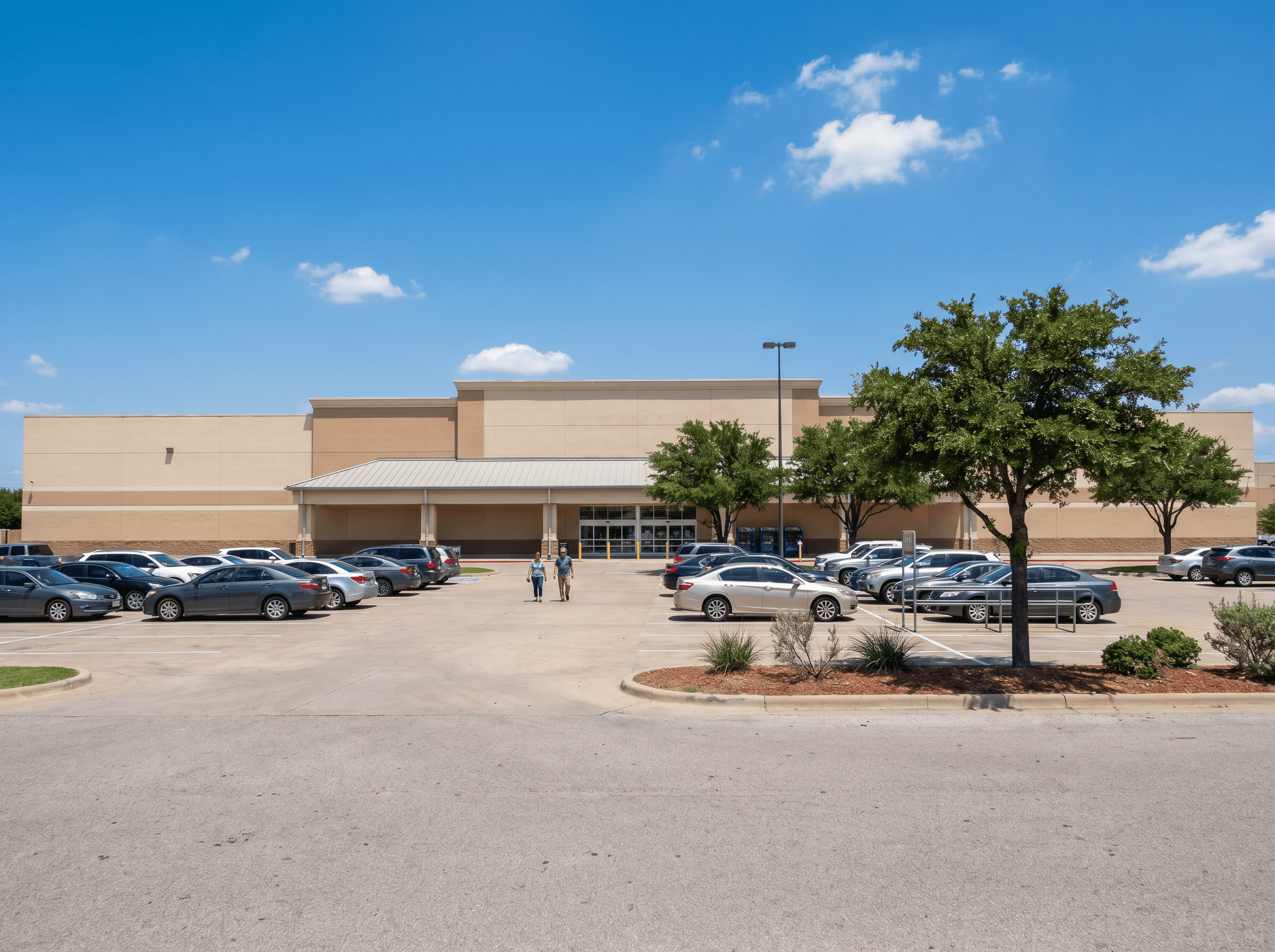
Walmart, Sam’s Club, and Simon Malls do not run out of landscaping vendors to choose from. Companies at that scale have their pick of contractors in every market they operate in, including Dallas-Fort Worth. So when a vendor keeps a contract that size, the real question isn’t how they won it once. It’s why a buyer with every option keeps choosing the same one.
Here’s what that standard actually involves. And here’s why it matters, even if your portfolio looks nothing like a national retailer’s. It usually has very little to do with how the flower beds look on a given afternoon. It has everything to do with whether the vendor shows up the same way every time. At the same standard. Without someone checking constantly.
The Vendors National Retailers Filter Out
A landscaping company has to clear real scrutiny first. That happens before it gets anywhere near a Walmart, a Sam’s Club, or a Simon property. Most smaller clients never think to ask for that same level of scrutiny. That means proof of insurance and liability coverage that matches the size of the property. A safety record that holds up across every location, not just the one someone happened to visit. References that get checked. And financial stability, so the vendor is still around in year three of the agreement.
That scrutiny doesn’t stop once the contract is signed. National accounts get reviewed on a regular cycle. Safety records get checked again. Performance gets measured against the schedule. Renewal has to be earned again, not assumed.
Most of what gets filtered out at this stage isn’t incompetence. It’s inconsistency. A vendor might do excellent work at one property and miss visits at another. Maybe the crew changes. Maybe the subcontractor changes. Maybe there’s no real system tying the locations together. At national scale, that inconsistency isn’t a minor annoyance. It’s a brand risk, multiplied across every property carrying the same name.
A property manager overseeing one location might not notice a slipping vendor for months. A brand managing dozens of locations usually notices within a single reporting cycle. The properties get compared against each other constantly, not just against last month’s version of themselves. That constant comparison is the real advantage of scale.
What the Vetting Standard Actually Protects
Three things tend to matter most to a buyer at this scale. None of them are about how the plants look.
The first is consistency across locations. A shopping center in Arlington and one in Frisco need to meet the same standard. They need the same kind of schedule too. It shouldn’t matter which crew shows up. That takes defined routes, training, and tracking, not just good intentions repeated at every site. It also means a manager overseeing dozens of locations can trust a report from any one of them. They don’t need to walk the property themselves to check it.
The second is accountability. Something eventually goes wrong on every property. When it does, one party needs to own it. It shouldn’t be a subcontractor pointing fingers at whoever hired them. And it shouldn’t stop there either. A vendor with in-house crews can trace a problem straight to its source. A vendor built on layers of subcontracts often can’t. The client is the one left waiting for an answer.
The third is tolerance for missed visits, and it’s close to zero. A missed mowing cycle at a small office park might go unnoticed for a week. The same miss at a busy retail center gets seen right away. It happens under a national brand, in front of a lot of people. That’s usually why performance clauses in these contracts are specific, not vague. A defined number of visits. A defined response time. Real consequences if either one slips.
Why This Matters Even If You Don’t Manage 40 Properties
Most property managers reading this aren’t overseeing a portfolio the size of Simon’s or Walmart’s. That’s exactly the point worth taking from it.
The standard a vendor has to meet to keep a national retail client isn’t a different standard. It’s the same one, applied at a bigger scale. Consistency and accountability protect a single HOA community just as much as they protect a mall. So does a real system behind the schedule. The same goes for a mid-size DFW office park. DFW vacancy has been running in the 10 to 12 percent range. Landlords can’t count on rent increases to cover that gap. That means the margin for a vendor problem is thinner than it used to be, not wider.
The difference is leverage. A national retailer can demand the higher standard and walk away if a vendor doesn’t meet it. A smaller property usually has less leverage to demand the same thing. It ends up accepting less, because nobody is holding the vendor to that bar. A vendor that already meets the national standard doesn’t lower it for a smaller contract. They just apply it to fewer locations.
A smaller property can still ask for the same things a national retailer asks for. Proof of insurance. A safety record. One point of contact. None of that requires forty locations to request it.
That’s also why the fine print in a vendor contract matters just as much for a single office park. It matters just as much for a portfolio of forty. The same clauses that protect a national retailer protect a smaller property too, from that same risk.
How Green Empire Meets That Standard
This is the standard we built Green Empire around from the start. It’s not something we adopted after landing a bigger client. In-house crews instead of subcontractors, so accountability never gets diluted across a chain of hand-offs. Defined routes and tracking, so a missed visit is the exception, not something that goes unnoticed for weeks. And a structure that comes from being part of the Empire Group. That includes Empire Construction, Empire Living Solutions, and MP4 Marketing. It also includes a Commercial Specialist team built around properties like these. Retail, office, and industrial clients each get a plan suited to how their property actually works.
Walmart, Sam’s Club, and Simon Malls prove this standard holds up. At scale. Over time. Every property we maintain across DFW, large or small, gets the same one.
If your current vendor wouldn’t survive that kind of scrutiny, it’s worth a conversation. Most vendors have never been asked to. Talk with a specialist about what a higher standard looks like for your property.